CAF Signs Technical Cooperation for Ecuador's National Competitiveness Policy

The Agreement
CAF — Development Bank of Latin America and the Caribbean — launched the II International Economic Forum alongside the Latin America & Caribbean 2026 Business Roundtable in Quito, signing a non-reimbursable technical cooperation agreement with Ecuador's Ministry of Production, Foreign Trade, Investment and Fisheries to develop a comprehensive national competitiveness policy.
The agreement provides CAF-funded technical assistance to design a policy framework aimed at improving Ecuador's productivity metrics, regulatory environment, and business climate — areas where the country has historically underperformed relative to regional peers.
CAF's Role in Ecuador
CAF is one of Ecuador's most significant multilateral partners, providing development financing, technical assistance, and policy advisory services across infrastructure, energy, trade facilitation, and institutional capacity.
| Metric | Value |
|---|---|
| CAF lending to Ecuador (cumulative) | $12.5B+ |
| Active portfolio | ~$3.2B |
| Sectors covered | Infrastructure, energy, trade, social development |
| Headquarters | Caracas (operational hub in Panama City) |
| Ecuador's shareholding | Member country since 1970 |
The technical cooperation agreement is non-reimbursable — meaning Ecuador receives the advisory services and policy design support as a grant, not a loan. This is distinct from CAF's larger credit operations and reflects the bank's role as a knowledge institution, not solely a lender.
Competitiveness Context
Ecuador's competitiveness rankings have been a persistent concern for policymakers and investors:
| Index | Ecuador's Rank | Regional Comparison |
|---|---|---|
| World Bank Doing Business (legacy) | 129th of 190 | Below Colombia (67th), Peru (76th) |
| WEF Global Competitiveness | 90th of 141 | Below Chile (33rd), Colombia (57th) |
| Heritage Economic Freedom | 150th of 176 | Among lowest in South America |
| Transparency International CPI | 121st of 180 | Below regional average |
The national competitiveness policy is expected to address:
- Regulatory simplification — reducing the number of procedures and days required to start a business, obtain permits, and register property
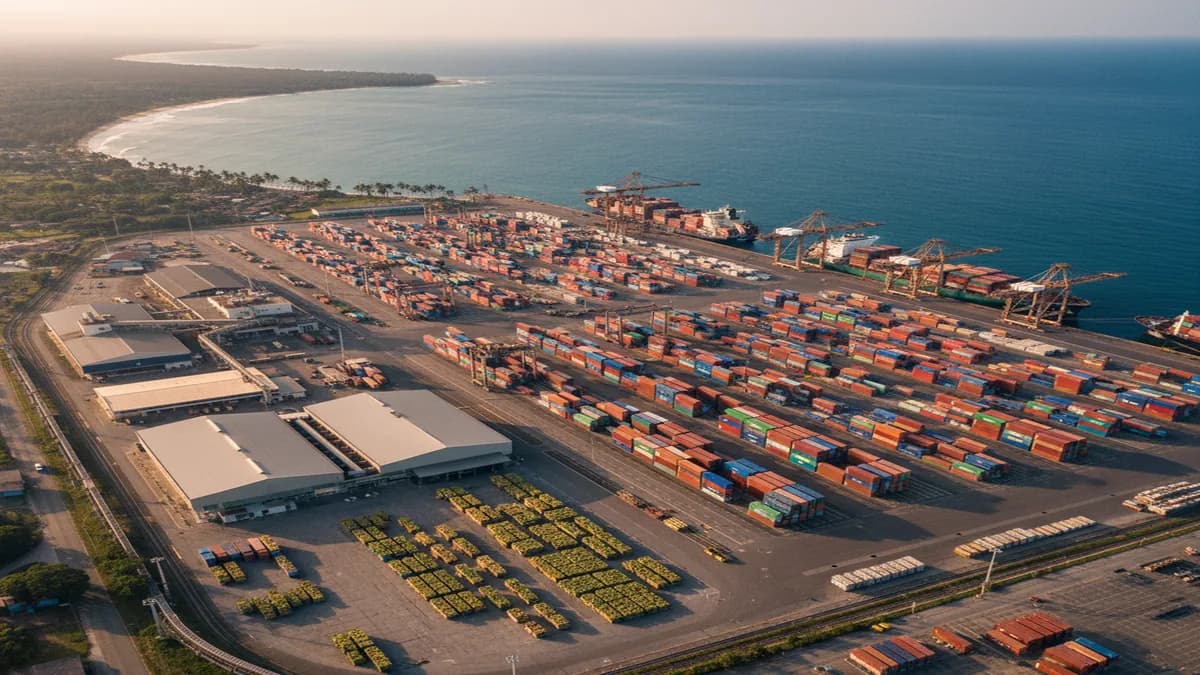
- Trade facilitation — improving customs processing times, digital single-window implementation, and port efficiency
- Innovation and technology — frameworks for digital economy development, R&D incentives, and intellectual property protection
- Human capital — workforce development aligned with priority sectors (mining, energy, technology, agro-industry)
Strategic Alignment
The CAF cooperation agreement arrives at a moment when Ecuador is constructing an unusually ambitious trade and investment architecture:
| Agreement | Status | Partner |
|---|---|---|
| China FTA | Operational (May 2024) | China |
| Canada FTA | Effective (2025) | Canada |
| U.S. ART | Signed March 13, 2026 | United States |
| UAE CEPA | Signed March 2026 | United Arab Emirates |
| EU Trade Agreement | Operational (2017) | European Union |
| EFTA FTA | Operational (2020) | Switzerland, Norway, Iceland, Liechtenstein |
The competitiveness policy is designed to ensure Ecuador can absorb and capitalize on the market access these agreements provide. Trade agreements open doors; competitiveness determines whether domestic firms can walk through them.
CAF's Business Roundtable component of the Quito event brought together private sector leaders from across Latin America to discuss investment opportunities, supply chain integration, and regional economic coordination — providing a networking platform that complements the institutional policy work.
What to Watch
- Policy design timeline — the technical cooperation typically produces a draft framework within 6-12 months; implementation timelines will determine practical impact
- Coordination with trade agreements — whether the competitiveness policy explicitly integrates obligations and opportunities from the U.S. ART, China FTA, and UAE CEPA
- CAF credit pipeline — technical cooperation often precedes larger lending operations; a follow-on credit facility for competitiveness-related investments is possible
- Institutional capacity — whether the Ministry of Production can absorb and implement CAF's recommendations given competing priorities (ART implementation, mining reform, security crisis)
Sources: CAF
Support daily Ecuador business intelligence.
Research support funds source monitoring, data checks, editing, publishing, and sector coverage for professionals tracking Ecuador.