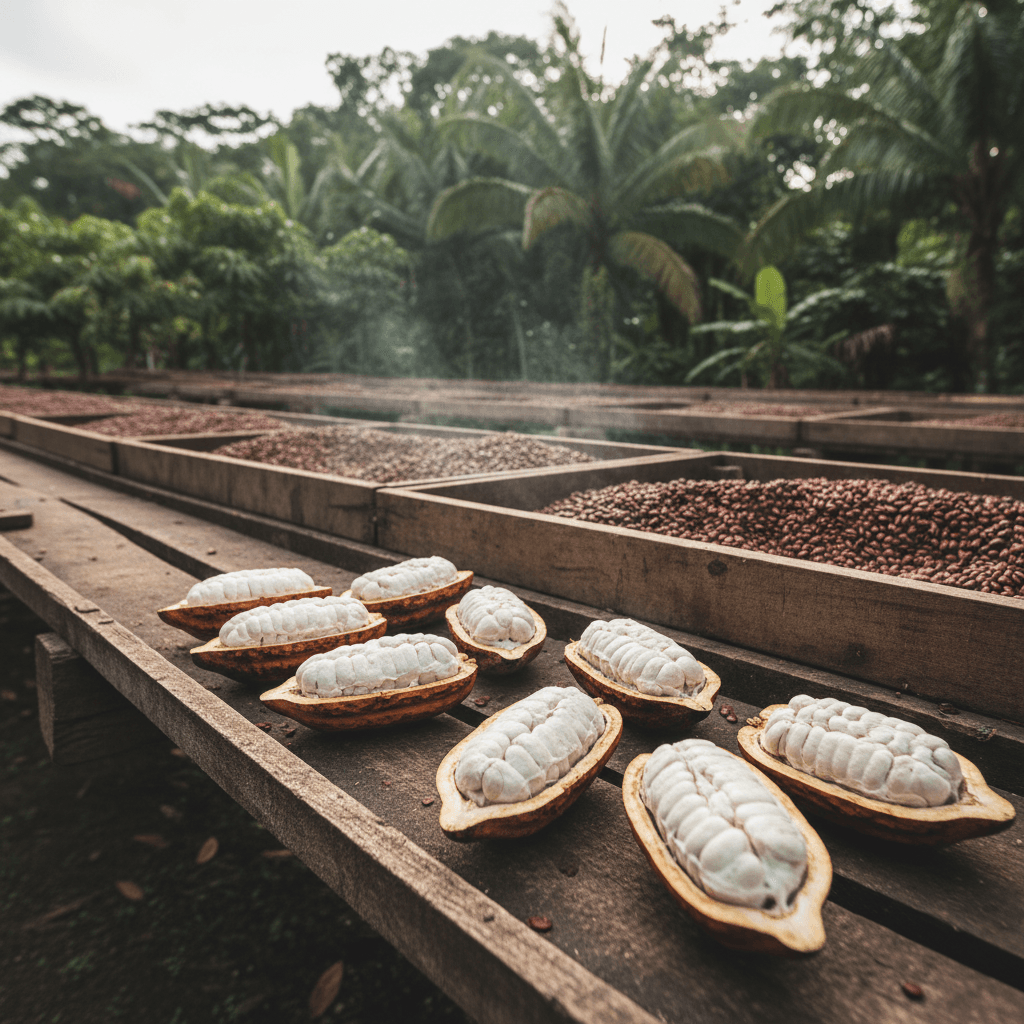
CECA-13 Cacao Clone Reports 1.8-2.0 Tons/Ha Annual Yields in El Oro

A new Ecuadorian cacao variety is entering the sector's productivity discussion as disease pressure remains a central variable for producers.
El Universo reports that the CECA-13 cacao clone was officially launched on May 20 in El Oro, where it was developed by researcher Erwin Cango.
Yield Data
| Metric | Source-reported figure |
|---|---|
| Development-zone yield | 1.8-2.0 tons per hectare per year |
| Other-locality evaluation range | 30-35 quintals per hectare |
| Approximate kilogram range cited | 1,360-1,588 kg |
El Universo reports that the variety's research and evaluation process began in the 1960s and then in the 1990s, as climate and productivity problems became more visible in traditional cacao plantations in the zone.
Disease And Quality Positioning
According to Cango's interview with El Universo, CECA-13 has productive potential under high-humidity conditions and shows behavior against fungal diseases affecting cacao, including monilia, phytophthora and witches' broom.
The article also reports that CECA-13 has a fine and aromatic organoleptic profile, positioning it for specialized markets and high-quality chocolates.
Business Relevance
| Variable | Why it matters |
|---|---|
| Yield stability | Reported productivity of 1.8-2.0 tons/ha would be material if replicated outside the development zone. |
| Disease behavior | Monilia, phytophthora and witches' broom are direct loss drivers in humid cacao areas. |
| Specialty profile | Fine aromatic qualities support differentiated market positioning rather than only bulk volume. |
What to watch
- Whether CECA-13 performance is replicated beyond El Oro under different soil and humidity conditions.
- Nursery availability, intellectual-property terms and adoption pace among producers.
- Independent yield validation against existing Ecuadorian cacao materials.
- Exporter and specialty-buyer response to the clone's organoleptic profile.
Source: El Universo
Source
El Universo — "El nuevo clon CECA-13 se perfila como una alternativa competitiva y sostenible para los productores de cacao"
View originalSupport daily Ecuador business intelligence.
Research support funds source monitoring, data checks, editing, publishing, and sector coverage for professionals tracking Ecuador.