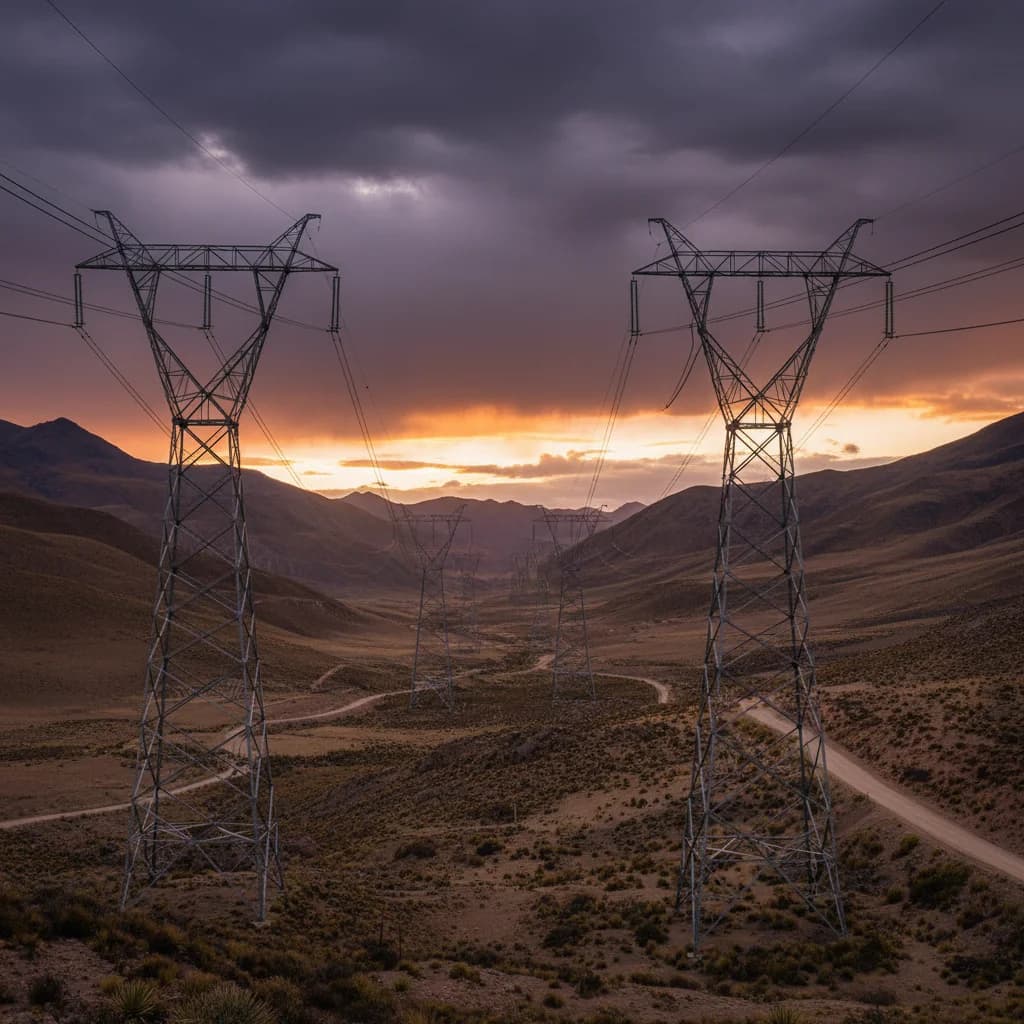
Colombia Cuts Electricity Exports to Ecuador as Tariff Dispute Strains Andean Energy Integration — Dry Season Grid Stability at Risk

Energy Weaponization
Colombia has suspended electricity exports to Ecuador as part of the escalating bilateral dispute triggered by Ecuador's 30% security tariff on Colombian imports. The suspension adds energy supply to the growing list of retaliatory measures, alongside Colombia's reciprocal 30% trade tariffs and the 900% increase in OCP pipeline transit fees.
The move transforms the trade dispute into a multi-front economic conflict affecting commerce, energy, and logistics simultaneously.
The Energy Dependency
Ecuador's electricity system relies heavily on hydroelectric generation, which is vulnerable to seasonal rainfall patterns:
| Power Source | Share of Generation | Installed Capacity | Seasonal Vulnerability |
|---|---|---|---|
| Hydroelectric | 75% | 5,100 MW | High — drops 20-30% in dry season |
| Thermal (gas/diesel) | 18% | 2,800 MW | Low — dispatchable year-round |
| Solar/wind | 2% | 200 MW | Low — complementary |
| Cross-border imports | 5% | ~500 MW interconnection | High — now suspended |
| Total | 100% | ~8,600 MW |
Colombia's electricity exports to Ecuador have historically provided a critical buffer during the March-September dry season, when reduced rainfall in the Andean highlands diminishes flow to Ecuador's major hydroelectric dams including Paute-Molino (1,100 MW), Coca Codo Sinclair (1,500 MW), and Sopladora (487 MW).
Scale of the Energy Gap
| Import Metric | 2024 | 2025 | 2026 (Risk) |
|---|---|---|---|
| Electricity imported from Colombia | 620 GWh | ~700 GWh | 0 GWh (suspended) |
| Average import capacity | 350 MW | 400 MW | 0 MW |
| Peak import capacity | 500 MW | 500 MW | 0 MW |
| Share of total consumption | 2.5% | 2.8% | 0% |
| Cost of imported electricity | $65/MWh | $70/MWh | N/A |
| Cost of thermal replacement | $120-180/MWh | $120-180/MWh | $120-180/MWh |
Replacing Colombian imports with domestic thermal generation costs approximately $120-180/MWh — nearly double the $65-70/MWh cost of cross-border purchases. The annual fiscal impact of substituting 700 GWh at the price differential is approximately $35-77 million.
The 2024 Blackout Precedent
The energy cut carries heightened significance because Ecuador experienced a devastating blackout crisis in late 2024:
| 2024 Blackout Metric | Value |
|---|---|
| Duration | October-December 2024 |
| Daily blackout hours | 8-14 hours at peak |
| Economic cost | $2.5-3 billion (estimated) |
| Cause | Drought + insufficient thermal backup |
| Political impact | Damaged Noboa approval ratings |
| Response | Emergency thermal procurement, barge-mounted generators |
The government has since invested in emergency thermal capacity and signed contracts for barge-mounted power plants, but these measures were designed to supplement — not replace — cross-border imports.
Government Response: Expanding Thermal and Solar
The Ministry of Energy has outlined several measures to compensate for the loss of Colombian electricity:
| Measure | Capacity | Timeline | Status |
|---|---|---|---|
| Termogas Machala expansion | 430 MW | Operational Q2 2026 | Under construction |
| Emergency barge generators | 300 MW | Already operational | Active |
| Zapotillo solar mega-project | 1,500 MW | Tender 2026, operational 2028 | Planning |
| Santa Elena solar project | 200 MW | Tender 2026, operational 2027 | Planning |
| Gas combined-cycle plant | 400 MW | Tender 2026, operational 2028 | Planning |
| Diesel from ADNOC (UAE) | Fuel supply | Active | Operational |
The Termogas Machala expansion — adding 430 MW of natural gas-fired generation — is the most immediate solution, expected to reach full capacity in Q2 2026 and partially offset the Colombian import loss.
Escalation Timeline
| Date | Action | Actor | Front |
|---|---|---|---|
| January 2026 | 30% security tariff on Colombian imports | Ecuador | Trade |
| January 2026 | Legal complaint filed at CAN | Colombia | Legal |
| February 2026 | 30% reciprocal tariff on 20 Ecuadorian products | Colombia | Trade |
| February 2026 | 900% OCP pipeline transit fee increase | Colombia | Energy/Oil |
| February 2026 | Electricity export suspension | Colombia | Energy |
| February 21 | 3 counter-complaints filed at CAN | Ecuador | Legal |
| February 23 | 580 companies, $273M at risk reported | Fedexpor/UPI | Economic impact |
Regional Implications
The Colombia-Ecuador energy disconnection threatens the broader Andean energy integration framework:
| Interconnection | Countries | Capacity | Status |
|---|---|---|---|
| Colombia-Ecuador | CO→EC | 500 MW | Suspended |
| Colombia-Venezuela | CO↔VE | 336 MW | Inactive since 2019 |
| Ecuador-Peru | EC↔PE | 100 MW | Limited operation |
| SINEA (Andean grid) | All CAN members | Variable | Aspirational |
The suspension sets a dangerous precedent for using energy infrastructure as a geopolitical weapon within the Andean Community, potentially discouraging future cross-border energy investment.
What to Watch
Track Ecuador's daily thermal generation dispatch data from CENACE — rising thermal dispatch signals the system is compensating for lost Colombian imports. Monitor reservoir levels at Paute and Coca Codo Sinclair — the March-September dry season will test whether reserves are sufficient without the Colombian buffer. Watch Termogas Machala construction timeline — any delays in the 430 MW expansion would significantly increase blackout risk. Track diesel import volumes — increased diesel purchases for thermal generation will appear in trade data within weeks. Monitor bilateral diplomatic channels — energy suspension may prove to be the escalation that forces both sides to negotiate.
Sources: Americas Quarterly, Strategic Energy EU, El Universo
Source
Americas Quarterly / Strategic Energy EU / El Universo — "Colombia Cuts Power Exports to Ecuador as Tariff Dispute Strains Andean Energy Integration"
View originalSupport daily Ecuador business intelligence.
Research support funds source monitoring, data checks, editing, publishing, and sector coverage for professionals tracking Ecuador.