Ecuador's Export Sector Absorbs $525 Million/Year in Security and Redundant Port Inspection Costs, Creating Hidden Competitiveness Drag

Quantifying the Hidden Cost
Fedexpor president Xavier Rosero presented detailed cost data at an industry event quantifying what exporters have long described as Ecuador's most significant non-tariff competitive disadvantage: the cumulative financial burden of private security spending and redundant government narcotics inspections on export containers.
The total: approximately $525 million per year — equivalent to roughly 1.8% of total non-oil export revenue — absorbed directly by the export sector.
Cost Breakdown
| Cost Category | Annual Amount | Detail |
|---|---|---|
| Private security | $400-425 million | Guards, surveillance, armored transport, facility hardening |
| Redundant narcotics inspections | ~$100 million | Multiple physical inspections per container |
| Total | ~$525 million | Structural annual cost to exporters |
The $525 million figure represents direct, quantifiable costs. Indirect costs — including shipment delays, lost perishable cargo, insurance premiums, and opportunity costs — are estimated by industry sources to add another $200-300 million, bringing the total security-related competitiveness drag to potentially $700-800 million annually.
The Inspection Problem
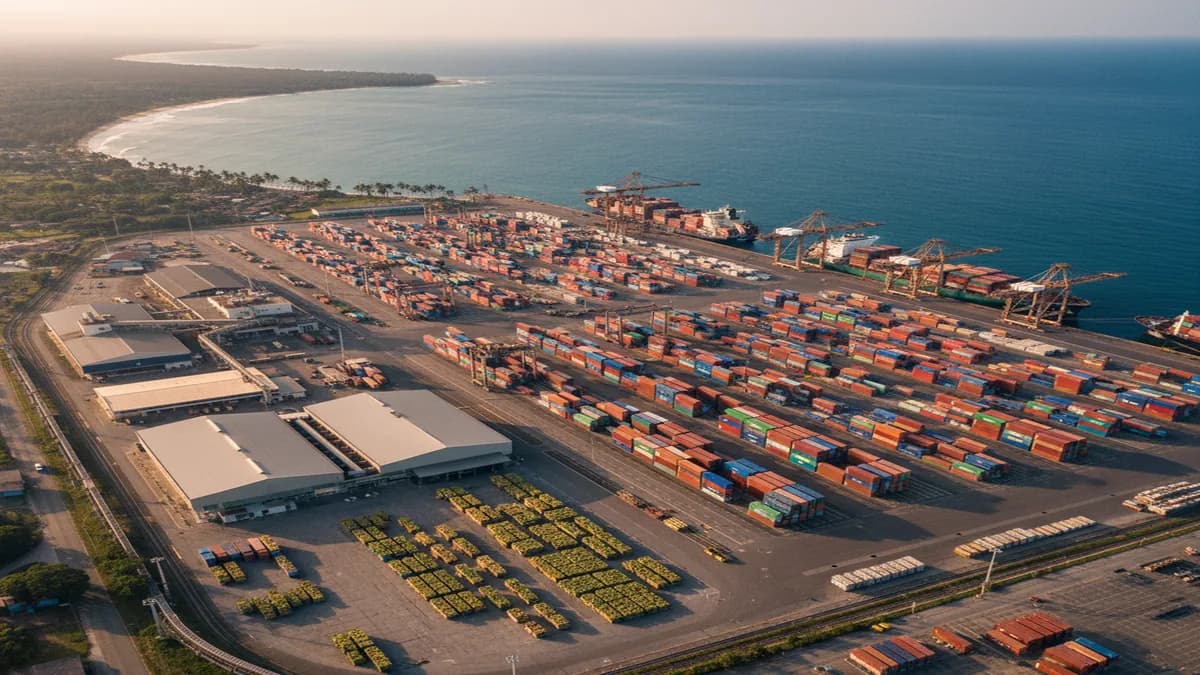
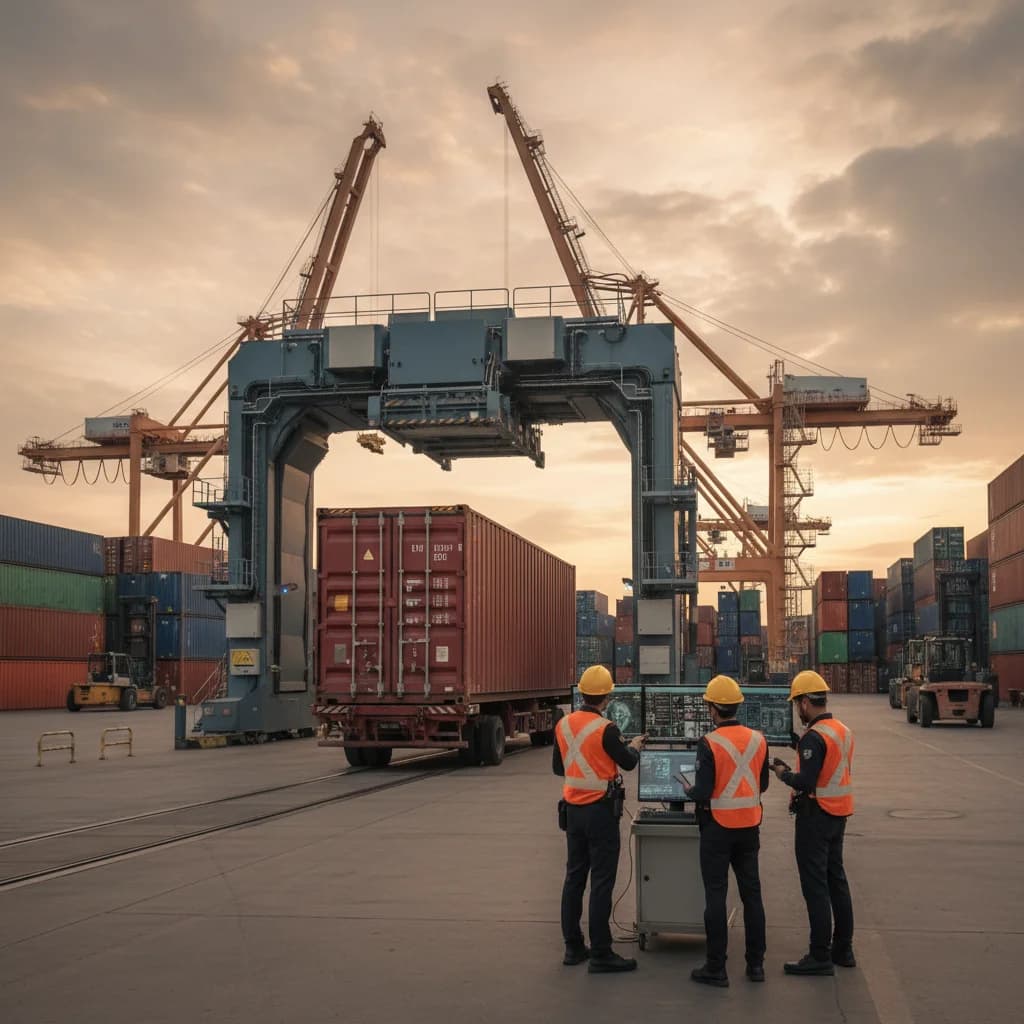
The most operationally disruptive cost is the redundant inspection regime that export containers face at Ecuadorian ports:
| Inspection Stage | Method | Cost Per Container | Who Performs |
|---|---|---|---|
| Stage 1: X-ray scan | Non-intrusive imaging | $50 | Port authority/customs |
| Stage 2: First physical inspection | Container opened, cargo examined | $200 | Antinarcotics police |
| Stage 3: Second physical inspection | Container re-opened at different point | $200 | UDAQ/Military |
| Stage 4: Third physical inspection | Random additional check | $200 | Customs/port security |
| Maximum total per container | — | $650 | Multiple agencies |
A container that undergoes the full inspection gauntlet pays $650 in inspection fees — 13 times the cost of the initial X-ray scan that should, in theory, be sufficient to detect contraband. Rosero argued that the X-ray technology currently deployed at major ports has detection rates exceeding 95%, making subsequent physical inspections largely redundant from a security standpoint.
Why Multiple Inspections Exist
The redundant inspection system reflects institutional fragmentation in Ecuador's counter-narcotics framework:
| Agency | Mandate | Inspection Authority |
|---|---|---|
| SENAE (Customs) | Trade compliance, duty collection | Container inspection at entry/exit |
| Policia Antinarcoticos | Drug interdiction | Physical inspection authority |
| UDAQ | Anti-drug intelligence | Container inspection authority |
| Military (FFAA) | Internal armed conflict operations | Port security zones |
| Port operators | Private security compliance | Facility-level screening |
Each agency operates under independent authority with limited coordination, leading to situations where a container cleared by one agency is flagged for re-inspection by another — sometimes at the same port, on the same day. Exporters describe the process as a "security theater tax" that fails to meaningfully improve interdiction rates while dramatically increasing costs and delays.
Impact on Perishable Exports
The inspection regime is particularly damaging for perishable commodity exports — Ecuador's largest export categories:
| Product | Inspection Sensitivity | Cost of Delay | Annual Losses |
|---|---|---|---|
| Shrimp | High — requires continuous cold chain | $500-1,000/container/day | Estimated $30-50M |
| Bananas | High — limited shelf life | $300-600/container/day | Estimated $20-40M |
| Flowers | Very high — days matter | $800-1,500/container/day | Estimated $15-30M |
| Tuna | Medium — frozen products more tolerant | $200-400/container/day | Estimated $10-20M |
| Cacao | Low — dry commodity | Minimal delay cost | <$5M |
For flower exporters, a single day of delay during peak inspection periods (such as the pre-Valentine's Day rush in February or the pre-Mother's Day period in May) can render an entire container worthless. Ecuador's flower industry has reported instances of containers being held for 48-72 hours across multiple inspection stages, resulting in total cargo losses.
Private Security Spending
The $400-425 million in annual private security spending reflects the broader security environment that Ecuador's export sector operates within:
| Security Cost | Estimated Annual Spend |
|---|---|
| Facility guards and surveillance | $150-180 million |
| Armored transport (cash and high-value cargo) | $80-100 million |
| Cybersecurity | $30-40 million |
| Executive protection | $20-30 million |
| Access control and perimeter security | $50-60 million |
| Insurance premium increases | $70-90 million |
Exporters in Guayaquil, Machala, and Esmeraldas — the cities most affected by organized crime — report the highest security expenditures, with some large companies dedicating 3-5% of gross revenue to security costs.
Competitiveness Comparison
| Country | Est. Security Cost as % of Exports | Inspection Regime | Competitiveness Impact |
|---|---|---|---|
| Ecuador | ~1.8% | Multiple redundant inspections | Significant drag |
| Peru | ~0.8% | Single-window inspection | Moderate |
| Chile | ~0.4% | Automated risk-based scanning | Minimal |
| Colombia | ~1.5% | Multiple agencies, similar issues | Significant |
| Mexico | ~1.2% | Cartography-based risk assessment | Moderate |
Ecuador's 1.8% security cost ratio is the highest in the region, placing its exporters at a measurable disadvantage versus Chilean competitors (0.4%) and Peruvian competitors (0.8%) in overlapping product categories like agriculture, fisheries, and processed foods.
Reform Proposals
Fedexpor has proposed a single-window inspection system modeled on Chile's approach:
| Reform Element | Proposal | Expected Saving |
|---|---|---|
| Unified inspection authority | Single agency conducts all container checks | $50-70M/year |
| Risk-based targeting | AI-driven container selection vs. random inspection | $20-30M/year |
| Enhanced X-ray reliance | Accept X-ray results as definitive for cleared containers | $30-40M/year |
| Digital tracking | Real-time container monitoring from facility to port | $15-20M/year |
| Estimated total savings | — | $115-160M/year |
Implementation would require inter-agency coordination agreements and potentially legislation to consolidate inspection authority — a politically challenging task when multiple agencies view container inspection as both a security mandate and a revenue source.
What to Watch
Track government response to Fedexpor's cost data — whether the MPCEIP or Ministry of Interior acknowledge the redundancy problem will signal reform appetite. Monitor port inspection volumes and seizure rates — data on how many containers are inspected versus how many yield actual contraband would reveal the inspection regime's effectiveness. Watch for single-window pilot programs — any announcement of a unified inspection pilot at Guayaquil's main port would represent the first concrete reform step. Track export competitiveness rankings — if security costs contribute to Ecuador losing market share to Peru or Chile in overlapping product categories, the economic case for reform becomes irresistible.
Sources: Primicias, KCH Comunicacion
Source
Primicias / KCH Comunicacion — "Sector exportador absorbe $525 millones anuales en costos de seguridad e inspecciones portuarias"
View originalSupport daily Ecuador business intelligence.
Research support funds source monitoring, data checks, editing, publishing, and sector coverage for professionals tracking Ecuador.