Government to Tender 2,100 MW Across Three Power Projects in 2026 — Including 1,500 MW Solar Mega-Plant in Zapotillo That Would Rank Among Latin America's Largest

The Three-Project Portfolio
Ecuador's Ministry of Energy and Mines announced plans to award three major power generation projects through competitive tender processes in 2026:
| Project | Technology | Capacity | Location | Est. Investment | Timeline |
|---|---|---|---|---|---|
| Gas combined-cycle | Natural gas thermal | 400 MW | TBD (coastal) | $400-500 million | Tender Q2 2026, operational 2028 |
| Santa Elena solar | Photovoltaic | 200 MW | Santa Elena province | $180-220 million | Tender Q2 2026, operational 2027 |
| Zapotillo solar | Photovoltaic | 1,500 MW | Zapotillo, Loja | $1.5-2.0 billion | Tender Q3 2026, phased 2028-2030 |
| Total | 2,100 MW | $2.5-3.0 billion |
Zapotillo: A Latin American-Scale Solar Project
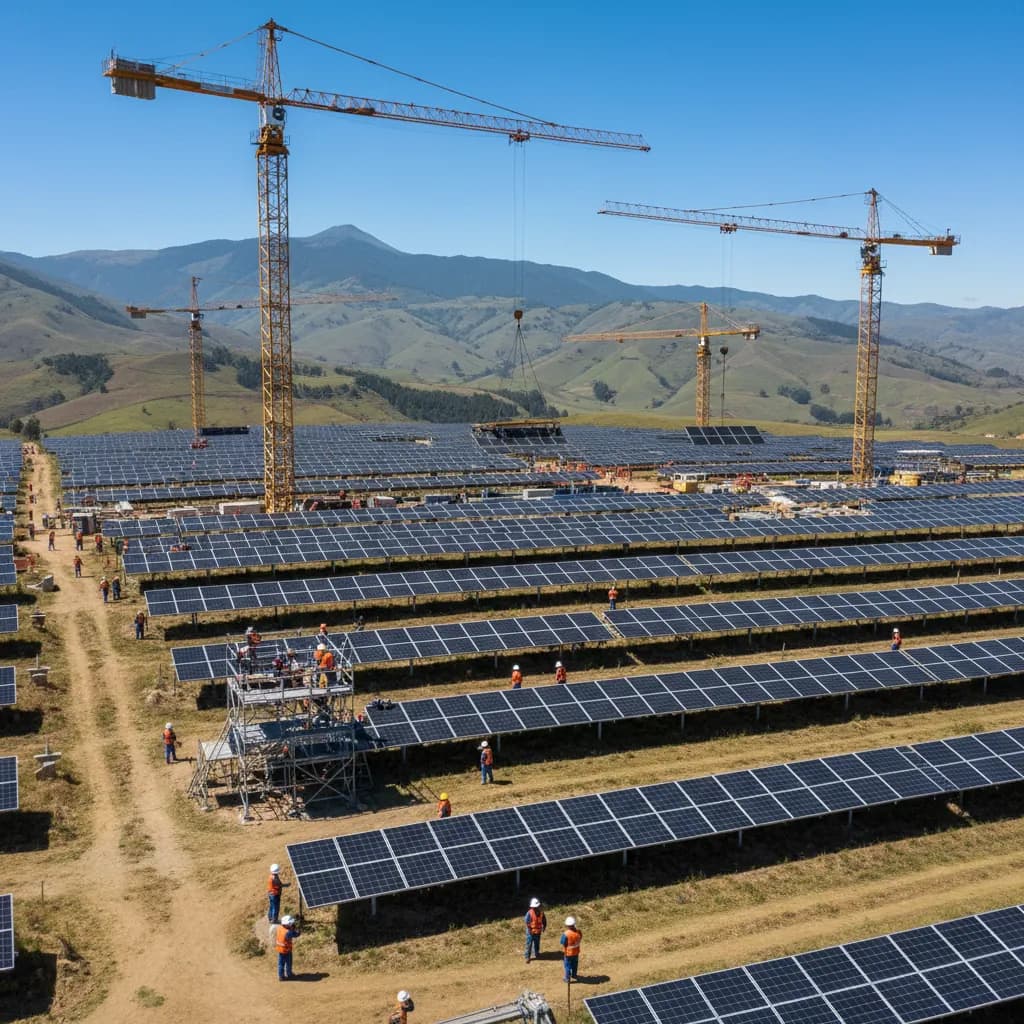
The 1,500 MW Zapotillo solar park would be one of the largest solar installations in Latin America upon completion:
| Solar Project Comparison | Country | Capacity | Status |
|---|---|---|---|
| Villanueva | Mexico | 893 MW | Operational |
| São Gonçalo | Brazil | 864 MW | Operational |
| Janaúba | Brazil | 1,200 MW | Under construction |
| Zapotillo (proposed) | Ecuador | 1,500 MW | Tender 2026 |
| Sol de los Andes | Chile | 1,000 MW | Operational |
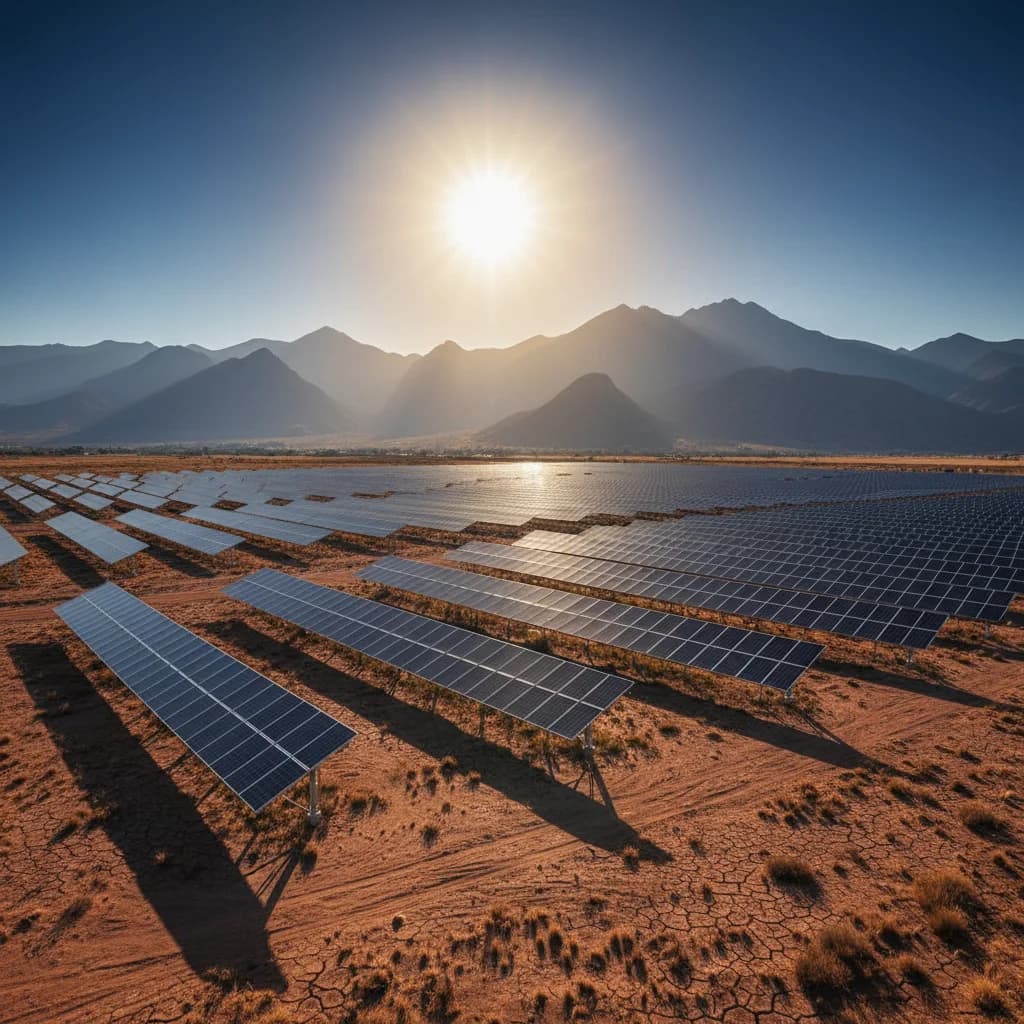
The Zapotillo location in southern Loja province was selected for its exceptional solar irradiance — the region receives an average of 5.2 kWh/m²/day, among the highest in Ecuador, with minimal cloud cover and consistent year-round sunshine due to the dry climate of the Catamayo-Zapotillo valley.
| Zapotillo Solar Site Data | Value |
|---|---|
| Solar irradiance | 5.2 kWh/m²/day (average) |
| Annual sunshine hours | ~2,400 hours |
| Estimated capacity factor | 22-25% |
| Annual generation | ~2,900-3,300 GWh |
| Land requirement | ~3,000-3,500 hectares |
| Nearest grid connection | Loja-Cuenca 230 kV line |
Strategic Context: Why Now
The three-project portfolio responds to several converging pressures:
1. The 2024 Blackout Crisis Ecuador suffered 8-14 hour daily blackouts during October-December 2024, costing the economy an estimated $2.5-3 billion. The crisis exposed the country's dangerous over-reliance on hydroelectric power, which provides 75% of generation but drops 20-30% during the dry season.
2. Colombia Energy Suspension Colombia's recent suspension of electricity exports removes approximately 500 MW of buffer capacity during peak demand periods, making domestic generation expansion urgent.
3. Growing Demand Ecuador's electricity demand is growing at approximately 3-4% annually, driven by economic recovery, urbanization, and — increasingly — electric vehicle adoption (EVs reached 22% of new vehicle sales in January 2026).
| Demand Projection | 2025 | 2026 | 2027 | 2028 | 2030 |
|---|---|---|---|---|---|
| Peak demand (MW) | 4,800 | 5,000 | 5,200 | 5,400 | 5,800 |
| Annual consumption (GWh) | 28,500 | 29,600 | 30,800 | 32,000 | 34,500 |
| EV electricity demand | 120 GWh | 200 GWh | 350 GWh | 500 GWh | 900 GWh |
Generation Mix Transformation
If all three projects are completed, Ecuador's generation mix would shift significantly:
| Source | 2025 Share | 2030 Projected Share | Change |
|---|---|---|---|
| Hydroelectric | 75% | 58% | -17 points |
| Thermal (gas) | 18% | 15% | -3 points |
| Solar | 1% | 18% | +17 points |
| Wind | 1% | 4% | +3 points |
| Other renewables | 0% | 2% | +2 points |
| Imports | 5% | 3% | -2 points |
The solar expansion would make Ecuador's grid significantly more resilient to drought, as solar generation peaks during dry, sunny periods — precisely when hydroelectric output drops.
Financing and Investment Structure
The government expects the projects to be structured as Build-Operate-Transfer (BOT) or Power Purchase Agreement (PPA) models:
| Financing Structure | Gas Plant | Santa Elena Solar | Zapotillo Solar |
|---|---|---|---|
| Model | BOT/PPA | PPA | PPA |
| Contract term | 20 years | 25 years | 25 years |
| Expected tariff | $55-65/MWh | $35-45/MWh | $30-40/MWh |
| Likely bidders | AES, Engie, Enel | Enel, Atlas, Solarpack | Enel, ACWA Power, TotalEnergies |
| Multilateral support | IDB, CAF | IDB, World Bank | IDB, IFC, Green Climate Fund |
Solar PPA prices of $30-45/MWh would make new solar generation cheaper than both thermal and imported electricity, providing an economic incentive alongside the energy security rationale.
What to Watch
Track formal tender documents — publication of the request for proposals (RFP) for each project will confirm the government's commitment and timeline. Monitor pre-qualification of bidders — the identity of international developers entering the competition signals market confidence in Ecuador's regulatory framework. Watch grid infrastructure planning — the 1,500 MW Zapotillo project requires significant transmission investment to connect to Ecuador's main grid. Track environmental impact assessments — particularly for Zapotillo, where large-scale land use in the dry forest ecosystem may face environmental review. Monitor the urgent mining and energy law in the National Assembly — regulatory changes could affect project structuring and investor protections.
Sources: Primicias, BNamericas
Source
Primicias / BNamericas — "Gobierno anuncia que licitará 2.100 megavatios con tres proyectos eléctricos en 2026"
View originalSupport daily Ecuador business intelligence.
Research support funds source monitoring, data checks, editing, publishing, and sector coverage for professionals tracking Ecuador.