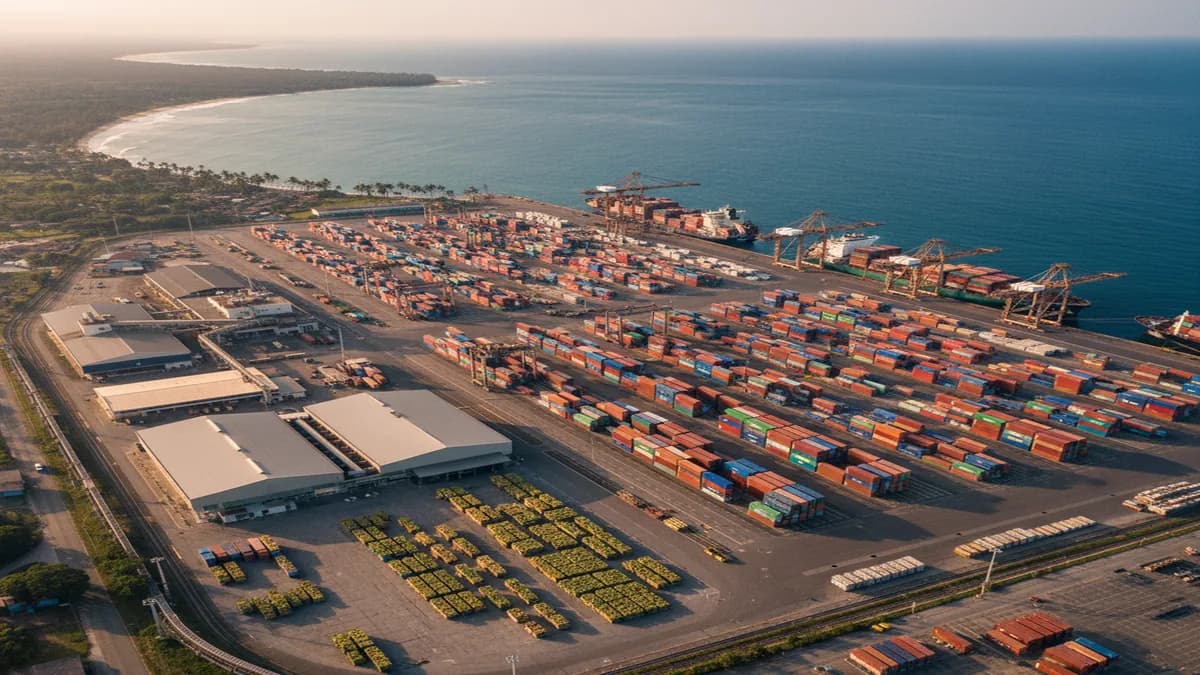
Petroecuador Deploys Hydraulic Fracturing in Block 57 as Production Slides to 2026 Low

Petroecuador confirmed on April 29 that hydraulic fracturing operations are underway in Block 57 (Shushufindi Libertador, Sucumbíos), executed in partnership with Chinese service provider CCDC. The target well is producing approximately 930 barrels per day.
Technical Significance
While Ecuador has employed conventional fracking in sandstone formations since the 1990s, this operation marks the first extraction from compact limestone ("Caliza A") formations — a technical escalation that distinguishes it from prior operations.
Former Energy Minister Fernando Santos clarified the distinction: "The 'shale fracking', as in the United States... we have not yet implemented." U.S. shale operations consume 1.5 to 16 million gallons of water per well (up to 60.5 million liters). Ecuador's conventional approach uses pressurized water and proppants (sand, ceramics, chemical additives) to create permeability in porous rock.
Production Context
The fracking deployment comes against a backdrop of declining output:
| Period | Production (bpd) | Notes |
|---|---|---|
| Q1 2025 | ~374,975 | Baseline comparison |
| Q1 2026 | 368,143 | -1.83% YoY |
| March 2026 | 364,876 | 2026 low |
| 2026 target | 369,000-370,000 | Full-year average |
Petroecuador accounts for roughly 80% of Ecuador's total oil production and generates the nation's second-largest budget revenue source. The production decline creates fiscal pressure that likely informed the decision to expand extraction techniques.
Former Petroecuador executive Marcela Reinoso noted that elevated Middle Eastern oil prices "likely justified the investment," adding: "The resource becomes reserves then production if economically viable."
Environmental Oversight Gaps
Wildlife Conservation Society director Sebastián Valdivieso raised unanswered questions about the operation: "No data has been provided on water quantity used, its source, or which proppants were deployed... we need to know what happens afterward — is water being released into the environment?"
Additional concerns flagged by environmental observers:
- No published hydrogeological studies assessing groundwater contamination risk
- Insufficient transparency on water recovery and treatment processes
- Proximity to ecologically sensitive Amazon basin waterways
What to Watch
- Whether Petroecuador expands limestone fracking to additional blocks in the Oriente. A successful pilot at 930 bpd could justify broader deployment
- Environmental disclosure requirements. Conservation groups are pressing for water usage data and proppant composition. Regulatory response will signal the government's tolerance for oversight
- Q2 2026 production data. If output continues below the 369,000 bpd target, pressure to accelerate unconventional techniques will intensify
- CCDC's role expansion. Chinese service providers gaining operational footholds in Ecuador's upstream sector has strategic implications for energy partnerships
Source: Primicias
Support daily Ecuador business intelligence.
Research support funds source monitoring, data checks, editing, publishing, and sector coverage for professionals tracking Ecuador.
