Bloque de Seguridad Militarizes Puerto Bolívar; 1,600-House Sweep Targets Drug Networks at Ecuador's Banana Export Hub

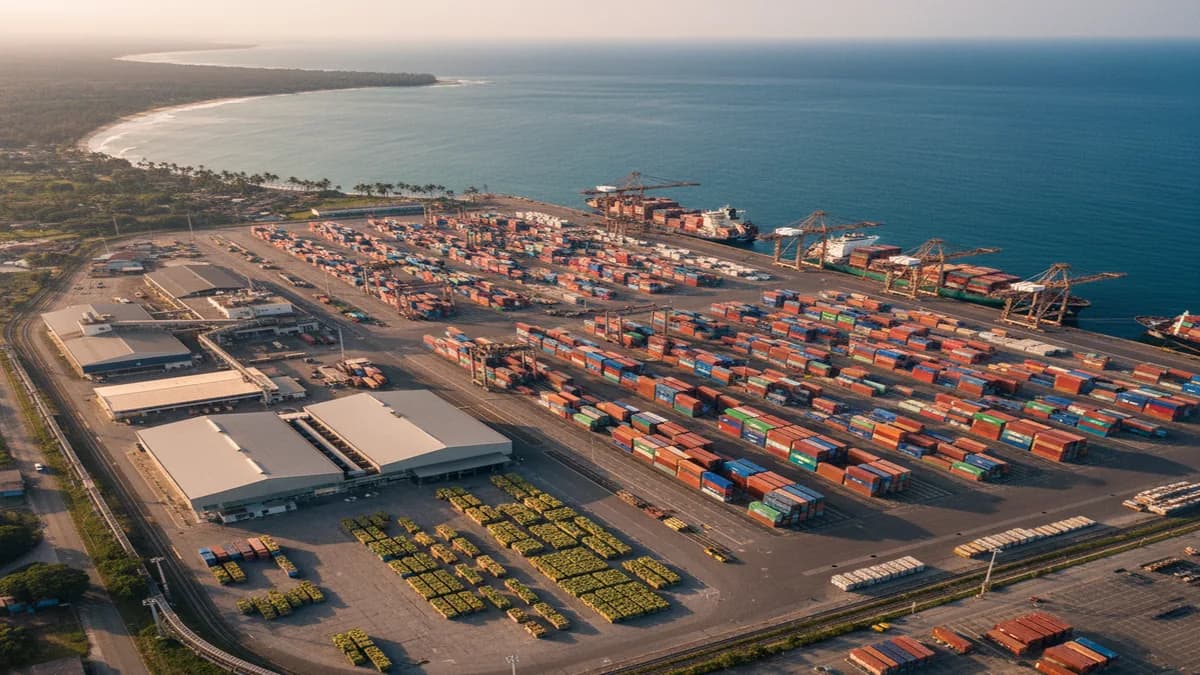
Ecuador's Bloque de Seguridad — the joint operation of Armed Forces, Police, and intelligence services that has been the Noboa administration's primary security tool through the 2026 curfew period — was deployed on May 14, 2026, to Puerto Bolívar in El Oro province. The operation plans to conduct house searches across approximately 1,600 residences in the next three days, according to El Telégrafo.
The Threat Assessment
Defense Minister Gian Carlo Loffredo described the criminal infrastructure the operation targets: "Conocemos de personas que están tratando de controlar el puerto para el envío de droga. También hay embarcaciones que salen a extorsionar a los pescadores" — networks attempting to control the port for cocaine shipments, plus vessels conducting extortion of fishermen.
This is consistent with the pattern documented at Ecuador's other major Pacific ports — Guayaquil, Manta, and Esmeraldas — where criminal control of port infrastructure has paralleled the rapid increase in cocaine seizures associated with Ecuador over the past five years.
Port Profile: Trade-Side Significance
Puerto Bolívar is one of Ecuador's most important commodity-export ports, particularly for the banana sector. The El Oro coastal corridor includes a significant share of national banana production, with Puerto Bolívar handling the corresponding export flows. Disruption to port operations — whether from criminal control, security operations, or both — has direct implications for:
- Banana exporters: shipment scheduling, container availability, port security overhead
- Shrimp industry: secondary effects via shared coastal logistics chains
- Fishing sector: directly affected by extortion described in the minister's statement
- Banana sector labor: stevedoring, transport, and packing operations along the El Oro corridor
The military operation should not interrupt commercial port functioning in the short term — the Bloque de Seguridad is targeting residential criminal infrastructure adjacent to the port, not the terminal itself. But sustained criminal control of any port introduces unquantified compliance and security risk into commodity export logistics.
Bloque de Seguridad Operational Pattern
The May 14 deployment continues an operational pattern observed since late April 2026:
- April 28 onward: Curfew Decreto 370 across nine provinces, mass detention operations
- May 4–13: Reports of 2,000+ detentions in curfew operations, with seizures of firearms and drug materials
- May 14: Puerto Bolívar deployment
The pattern suggests the administration is systematically applying the joint-task-force model to specific geographic chokepoints — first urban perimeters under curfew, now coastal port infrastructure.
What to Watch
- Operational duration beyond the announced three-day search window.
- Banana sector statements from ANECACAO, AEBE, or major exporters about port operations during and after the intervention.
- Vessel and container traffic data at Puerto Bolívar through the May reporting period.
- Comparable operations at Manta, Esmeraldas, or other coastal ports — replication of the model would indicate institutional commitment vs one-off action.
- Sentencing and prosecutions arising from the 1,600-house search; arrest volume alone is not the measure of the operation's effect on criminal networks.
- Fisherman extortion reporting post-operation — the secondary economy the minister flagged is the harder metric to displace.
Sources: El Telégrafo, Teleamazonas
Source
El Telégrafo — "Puerto Bolívar amaneció militarizado en ofensiva contra grupos criminales"
View originalSupport daily Ecuador business intelligence.
Research support funds source monitoring, data checks, editing, publishing, and sector coverage for professionals tracking Ecuador.