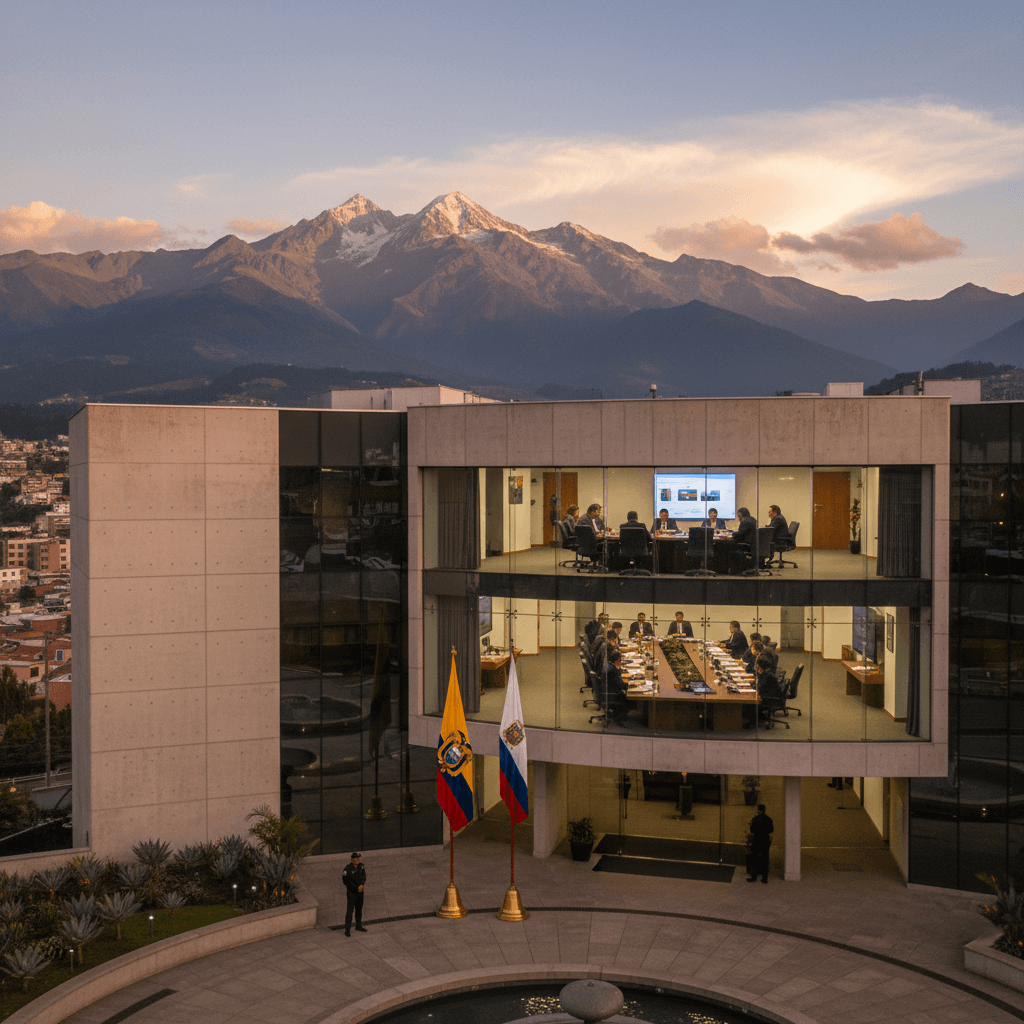
Quito COE Reviews El Niño Water Plan as Blanco Chico Repairs Target 700 L/s

Quito's metropolitan emergency committee is reviewing a contingency plan for El Niño risks, with water reserves and fire response at the center of the agenda.
The Secretaría Nacional de Gestión de Riesgos requested action plans from local governments. Quito's plan was scheduled for review by the COE Metropolitano on June 19, 2026 before submission to the national risk-management authority.
Water Infrastructure Focus
The main operational issue is possible rainfall reduction over the next several months. Mayor Pabel Muñoz said Quito's priority is to increase reserve capacity to avoid water-service disruptions.
A key project is the recovery of Blanco Chico, part of the Salve Faccha reservoir infrastructure. The structure collapsed in 2021 and had previously added around 700 liters per second to the supply system.
| Item | Data point |
|---|---|
| System focus | Papallacta |
| Papallacta coverage | About 50% of Quito's population |
| Blanco Chico target recovery | 700 liters per second |
| Estimated intervention cost | USD 700,000 |
| Expected completion | End of month |
Muñoz said the Blanco Chico works would recover 700 liters per second to feed the Papallacta reservoir and strengthen the system for a possible dry season.
Business Continuity Risk
The contingency plan is not theoretical. In 2024, Quito experienced nearly two months without precipitation, leading to water restrictions. More than 100 neighborhoods in the center and south had cuts exceeding eight hours per day.
The city is also reviewing Plan Fuego, its preventive and response framework for potential forest emergencies.
From Epmaps, Operations Manager Johanna Patiño said the utility has expanded emergency capacity by acquiring 10 tankers, raising the fleet to 16 vehicles. The company also maintains contracts with private operators to reinforce water transport if needed.
Quito's potable-water coverage is currently 95%, while supply is guaranteed for more than 90% of the population. Around 10% of residents, mainly in high and peripheral zones, could face greater risk in a prolonged drought.
Investment Implication
Water reliability is a core operating risk for Quito real estate, hospitality, healthcare, education and office assets. The Blanco Chico repair has a relatively small capital cost compared with the economic disruption associated with extended rationing.
For investors, the near-term question is whether Quito can convert contingency planning into measurable reserve capacity before a dry-season stress event.
What to watch
- COE approval and national submission of Quito's plan
- Completion timing for Blanco Chico repairs
- Reservoir levels in the Papallacta system
- Water-service restrictions in high and peripheral zones
- Fire-risk alerts tied to dry-season conditions
Support daily Ecuador business intelligence.
Research support funds source monitoring, data checks, editing, publishing, and sector coverage for professionals tracking Ecuador.
