US-Ecuador Nuclear Energy Cooperation Agreement Signed — Civilian Power and Research
 Chip Moreno||Source: Infobae
Agreement Framework
The United States and Ecuador signed a bilateral nuclear energy cooperation agreement (commonly known as a "123 Agreement" under US law) establishing the legal framework for civilian nuclear technology transfer, training, and project development. The agreement was published in Ecuador's Official Register following diplomatic exchanges in Washington.
| Parameter | Detail |
|---|---|
| Agreement type | Bilateral nuclear energy cooperation (123 Agreement framework) |
| Parties | United States — Ecuador |
| Scope | Civilian nuclear power generation and research |
| Military/weapons | Explicitly excluded |
| Status | Signed; implementation framework pending |
| Legal basis (US) | Section 123 of the Atomic Energy Act of 1954 |
Energy Deficit Context
The agreement's timing is directly linked to Ecuador's structural energy crisis, which reached critical intensity in 2024:
| Energy Metric | Value |
|---|---|
| Installed capacity | ~8,800 MW |
| Hydroelectric share | ~75% |
| Thermal share | ~20% |
| Renewable (non-hydro) | ~5% |
| Peak demand (2025) | ~4,800 MW |
| 2024 deficit | Up to 1,500 MW during drought |
| Estimated economic cost (2024) | $3-4 billion |
| Blackout hours (2024 peak) | Up to 14 hours/day in some provinces |
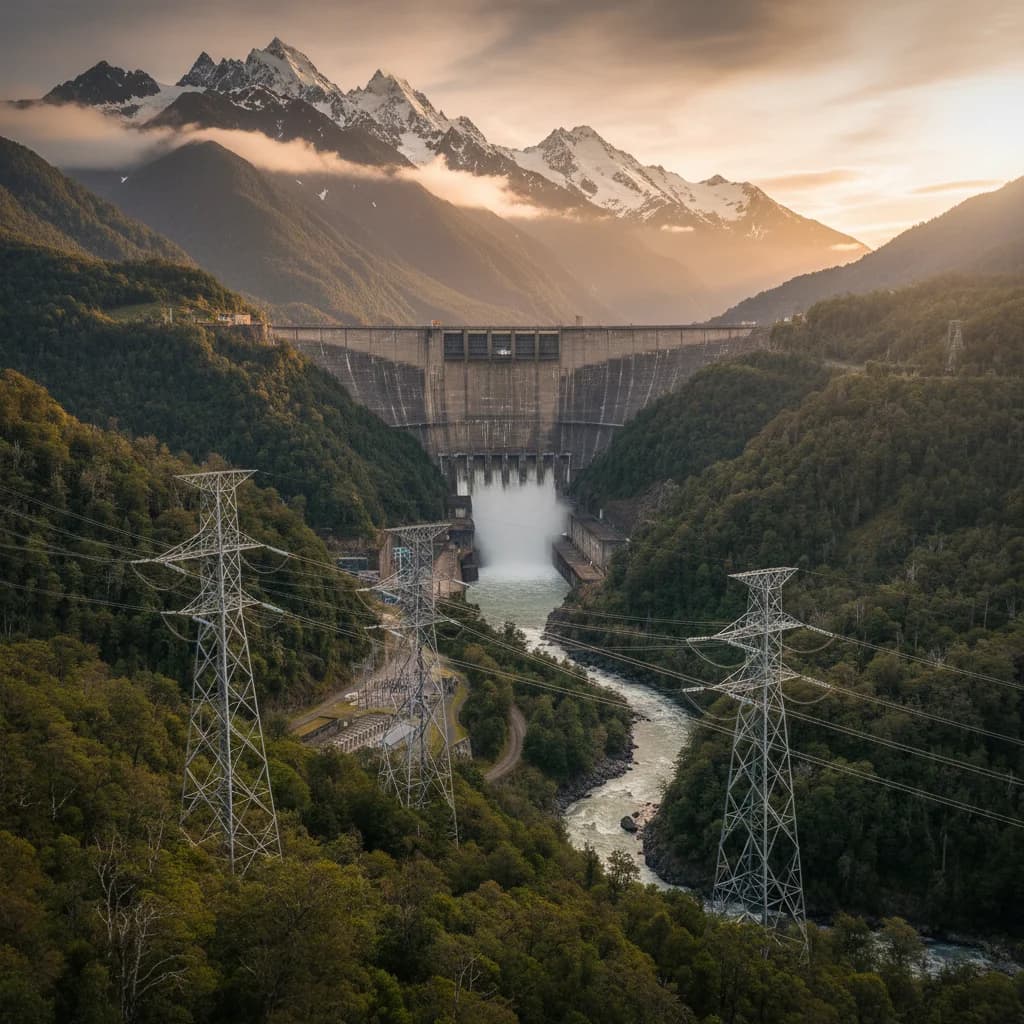
Ecuador's ~75% dependence on hydroelectric generation makes the grid critically vulnerable to drought cycles, which are intensifying due to climate change and El Niño variability. The 2024 crisis — which saw rolling blackouts of up to 14 hours per day in some provinces — exposed the urgent need for baseload generation that does not depend on rainfall.
Nuclear Energy Potential
Nuclear energy represents a long-term diversification option for Ecuador's energy matrix, though deployment is realistically a 10-15 year horizon:
| Nuclear Option | Capacity | Timeline | Estimated Cost |
|---|---|---|---|
| Small Modular Reactor (SMR) | 50-300 MW per unit | 2035-2040 | $1-3 billion per unit |
| Research reactor | 1-10 MW | 2030-2033 | $50-200 million |
| Full-scale conventional | 1,000+ MW | 2040+ | $8-15 billion |
Small Modular Reactors (SMRs) — the most likely near-term application — are being developed by several US companies including NuScale Power, TerraPower (Bill Gates-backed), and X-energy. SMRs offer several advantages for Ecuador's context:
- Scalable deployment — units of 50-300 MW match Ecuador's grid capacity
- Smaller footprint — suitable for geographic constraints
- Baseload reliability — operates independently of weather and hydrology
- Lower upfront capital — compared to conventional nuclear plants
Cooperation Components
The agreement is expected to cover multiple cooperation tracks:
Power Generation Track
- Feasibility studies for nuclear power plant siting
- Technology assessment and vendor selection support
- Regulatory framework development (nuclear safety authority)
- Grid integration analysis
- Workforce training and university programs
Research Track
- Medical isotope production for cancer treatment
- Agricultural applications (food irradiation, pest control)
- Materials science and industrial applications
- Academic partnerships with Ecuadorian universities
- Comisión Ecuatoriana de Energía Atómica (CEEA) capacity building
Strategic Partnership Context
The nuclear agreement slots into an expanding US-Ecuador strategic partnership that has deepened significantly under the Noboa administration:
| Agreement | Date | Domain |
|---|---|---|
| Security cooperation | Ongoing since 2023 | Counter-narcotics, military equipment, intelligence sharing |
| Reciprocal trade agreement | March 13, 2026 | Tariff elimination, mineral exports, agriculture |
| Nuclear energy cooperation | March-April 2026 | Civilian power and research |
| Mining cooperation | 2025 | Critical minerals supply chain (copper, lithium) |
The US has strategic interest in Ecuador's nuclear pathway for several reasons:
- Counter Chinese influence — China's CGN and Russia's Rosatom have been expanding nuclear cooperation in Latin America (Argentina, Brazil, Bolivia)
- Critical minerals — nuclear cooperation strengthens the broader US-Ecuador minerals partnership, particularly around copper and rare earth supply chains
- Regional security — energy stability in Ecuador reduces migration pressure and strengthens a key allied government
Regional Comparison
Ecuador would be entering nuclear energy at a relatively early stage compared to regional peers:
| Country | Nuclear Status | Capacity |
|---|---|---|
| Argentina | Operating (3 reactors) | 1,641 MW |
| Brazil | Operating (2 reactors) | 1,884 MW |
| Mexico | Operating (2 reactors) | 1,552 MW |
| Chile | Research reactor only | N/A |
| Colombia | Research reactor only | N/A |
| Ecuador | No reactors; cooperation agreement signed | N/A |
What to Watch
- Feasibility study commissioning — the first concrete deliverable under the agreement; US Department of Energy or national laboratory involvement (likely Idaho National Laboratory or Oak Ridge) would signal serious implementation intent
- Regulatory framework — Ecuador currently lacks a nuclear regulatory authority; establishing one is a prerequisite for any reactor deployment and will require legislative action in the National Assembly
- SMR vendor engagement — whether NuScale, TerraPower, or X-energy conduct preliminary site assessments in Ecuador; NuScale's recent certification by the US Nuclear Regulatory Commission makes it the frontrunner for export
- CEEA capacity — the Comisión Ecuatoriana de Energía Atómica's institutional capacity will need significant expansion; training pipelines with US universities will be an early indicator
- Financing structure — nuclear projects require sovereign-backed financing or multilateral guarantees; the US International Development Finance Corporation (DFC) and Export-Import Bank could play catalytic roles
- Political continuity — nuclear energy projects span multiple presidential terms; the agreement's durability will depend on whether it survives potential political transitions
Source: Infobae
Source
Infobae
Support daily Ecuador business intelligence.
Research support funds source monitoring, data checks, editing, publishing, and sector coverage for professionals tracking Ecuador.