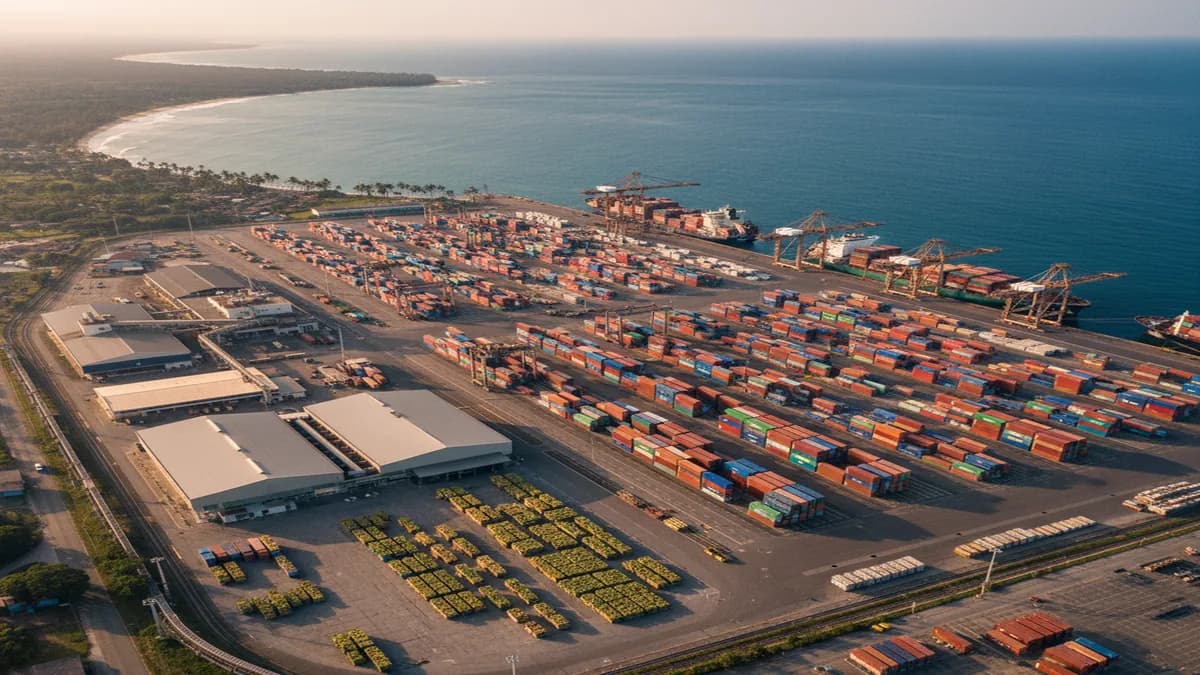
China-Ecuador FTA at Two Years: Non-Petroleum Trade Deficit Widens 467% as Chinese Imports Surge 30%

The China-Ecuador Free Trade Agreement, which entered force on May 1, 2024, has completed its second year with trade data that underscores a structural imbalance. Chinese imports into Ecuador have accelerated sharply while Ecuadorian exports have largely plateaued, producing a non-petroleum trade deficit nearly six times larger than pre-agreement levels.
Trade Balance: The Core Numbers
| Metric | 2023 (Pre-FTA) | 2025 (Year 2) | Change |
|---|---|---|---|
| Exports to China | $5.669B | $5.920B | +4.43% |
| Imports from China | $6.004B | $7.821B | +30.26% |
| Non-petroleum deficit | -$335M | -$1.901B | +467% |
The asymmetry is stark: for every additional dollar Ecuador exports to China, China sends back approximately seven dollars in additional goods.
Export Performance by Product
Shrimp remains Ecuador's dominant China-bound export at $3.411 billion — up $457 million from 2023 and accounting for approximately 58% of total exports to China. Mining products, balsa wood, and bananas have also posted gains.
A protocol for dairy product exports to China was signed in May 2025, though commercial volumes have not yet materialized.
Despite the shrimp anchor, China's share of Ecuador's export portfolio has declined. China dropped from Ecuador's #1 export destination in 2023 to #3 by 2025, reflecting stronger growth in other markets rather than absolute export contraction.
Import Composition
Ecuador's main purchases from China:
| Category | Estimated Value |
|---|---|
| Machinery & technology | $2.7B+ |
| Vehicles | $1.2B+ |
| Industrial raw materials | Not specified |
Analysts characterize this as market substitution — Ecuador is increasingly sourcing machinery, vehicles, consumer electronics, and industrial inputs from China that were previously purchased from Europe and the United States. The FTA's tariff reductions have made Chinese goods price-competitive against incumbents across multiple product categories.
Dollar Economy Implications
Ecuador's dollarized economy makes trade deficits structurally significant. Unlike countries with sovereign currencies, Ecuador cannot devalue to correct trade imbalances. A $1.9 billion non-petroleum deficit with a single trading partner represents a direct outflow of dollars from the domestic economy.
If the current trajectory continues — with imports growing at approximately 15% annually and exports at approximately 2% — the deficit with China alone could exceed $3 billion by 2027, placing additional pressure on Ecuador's dollar liquidity and balance of payments position.
What to Watch
- Shrimp demand sensitivity. With shrimp comprising 58% of Ecuador's China-bound exports, any softening in Chinese demand — whether from economic slowdown or competitor displacement (India, Vietnam) — would immediately worsen the deficit
- Dairy export ramp. The 2025 protocol opens a new product channel, but commercial-scale exports remain unproven. Timeline to meaningful volumes is likely 12-18 months
- Vehicle import surge. Chinese-brand vehicles (BYD, Chery, Great Wall) are gaining rapid market share in Ecuador. This category alone could add $500M+ to annual imports within two years
- BCE balance-of-payments data. The Central Bank's next quarterly report will show whether the China deficit is being offset by surplus positions with other trading partners or whether it represents a net dollar drain
Source: El Universo
Support daily Ecuador business intelligence.
Research support funds source monitoring, data checks, editing, publishing, and sector coverage for professionals tracking Ecuador.
