Ecuador Valentine's Day Flower Exports Rise 3% to 39,000 Tons But Revenue Falls to $274 Million as Combined 21.8% US Tariff Erodes Margins

39,000 Tons Shipped, But Revenue Declines
Ecuador — the world's third-largest flower exporter behind the Netherlands and Colombia — shipped approximately 39,000 tons of flowers for Valentine's Day 2026, up 3% from 37,000 tons in 2025.
Despite the volume increase, revenue is projected to decline to $274-276 million from $282 million in 2025 — a drop of approximately $6-8 million attributable to US tariff pressure.
Valentine's Day accounts for 30% of annual flower sector sales, making it the industry's most critical commercial window.
The Tariff Squeeze
| Tariff Component | Rate |
|---|---|
| Existing US duty | 6.8% |
| Trump administration surcharge (2025) | 15.0% |
| Combined effective rate | 21.8% |
Alejandro Martinez, Executive President of Expoflores (the national flower producers and exporters association), directly attributed the revenue decline to the US tariff surcharge. At a combined 21.8% effective rate, Ecuadorian flowers face a significant competitive disadvantage against Colombian producers, which benefit from the US-Colombia FTA's zero-tariff access.
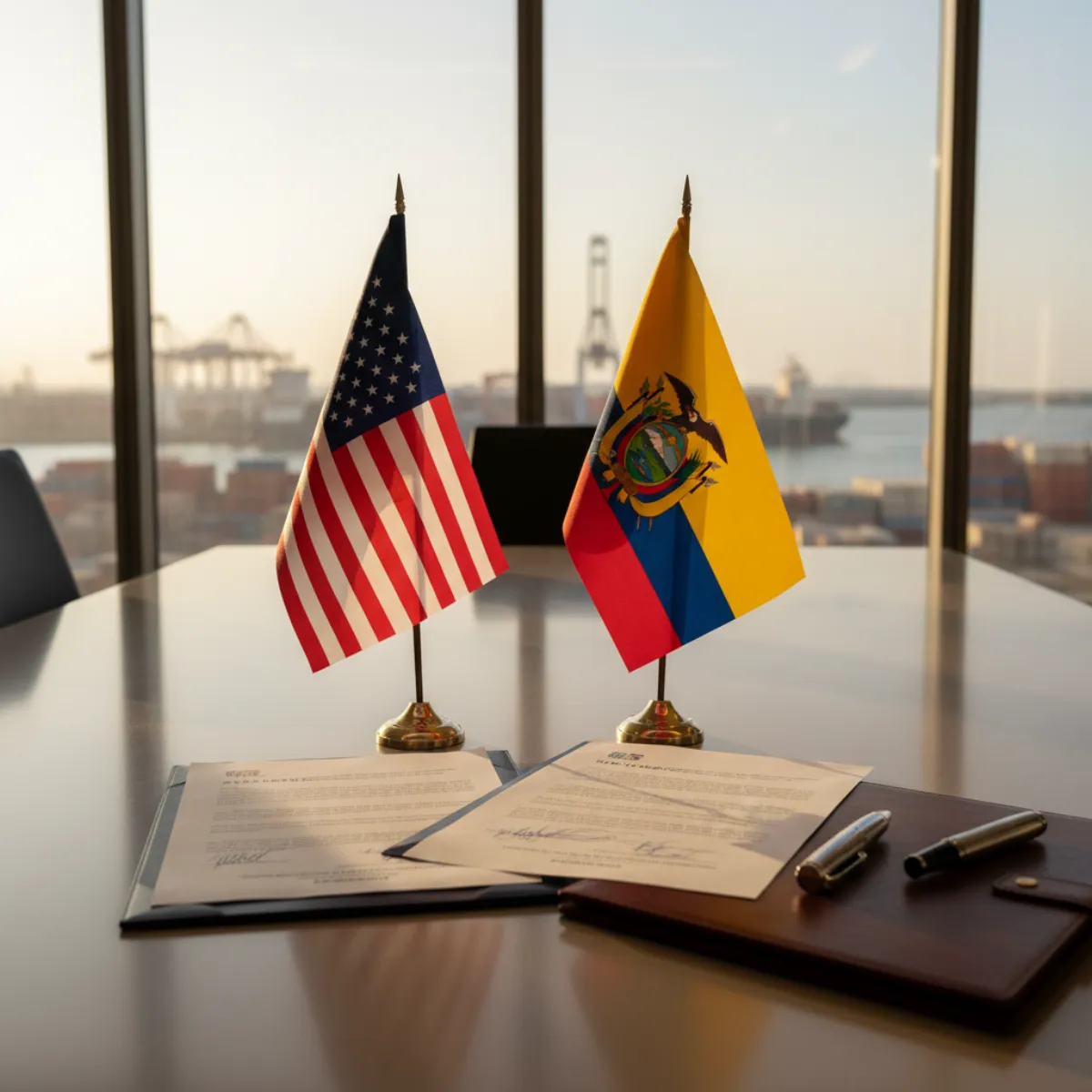
The recently concluded US-Ecuador Agreement on Reciprocal Trade (ART), which eliminates the 15% surcharge, would — upon signing — restore approximately $130-150 million in annual margin to the sector. However, the Valentine's 2026 season shipped before the ART takes effect.
Logistics: 534 Flights Through Quito
The Valentine's export operation is one of Latin America's most intensive air cargo campaigns:
| Metric | Value |
|---|---|
| Total cargo | 39,000 tons |
| Flights (pre-Feb 1 window) | 534 |
| Cargo (Jan 20 - Feb 1) | 17,000+ tons in 332 aircraft |
| Airlines operating | 16 companies |
| Primary destinations | Miami, Amsterdam |
| Airport capacity increase | 6% year-over-year |
Ramon Miro, President of Quiport (the corporation operating Quito's Mariscal Sucre International Airport), reported a 6% increase in cargo throughput for the Valentine's window.
Ecuador's Flower Industry by the Numbers
| Metric | Value |
|---|---|
| Global ranking | 3rd (behind Netherlands, Colombia) |
| Plantation area | 6,200 hectares |
| Direct employment | 120,000 workers |
| Valentine's share of annual sales | 30% |
| Primary product | Large-headed roses |
| Competitive advantage | Equatorial altitude (2,800m+), year-round production, premium bud size |
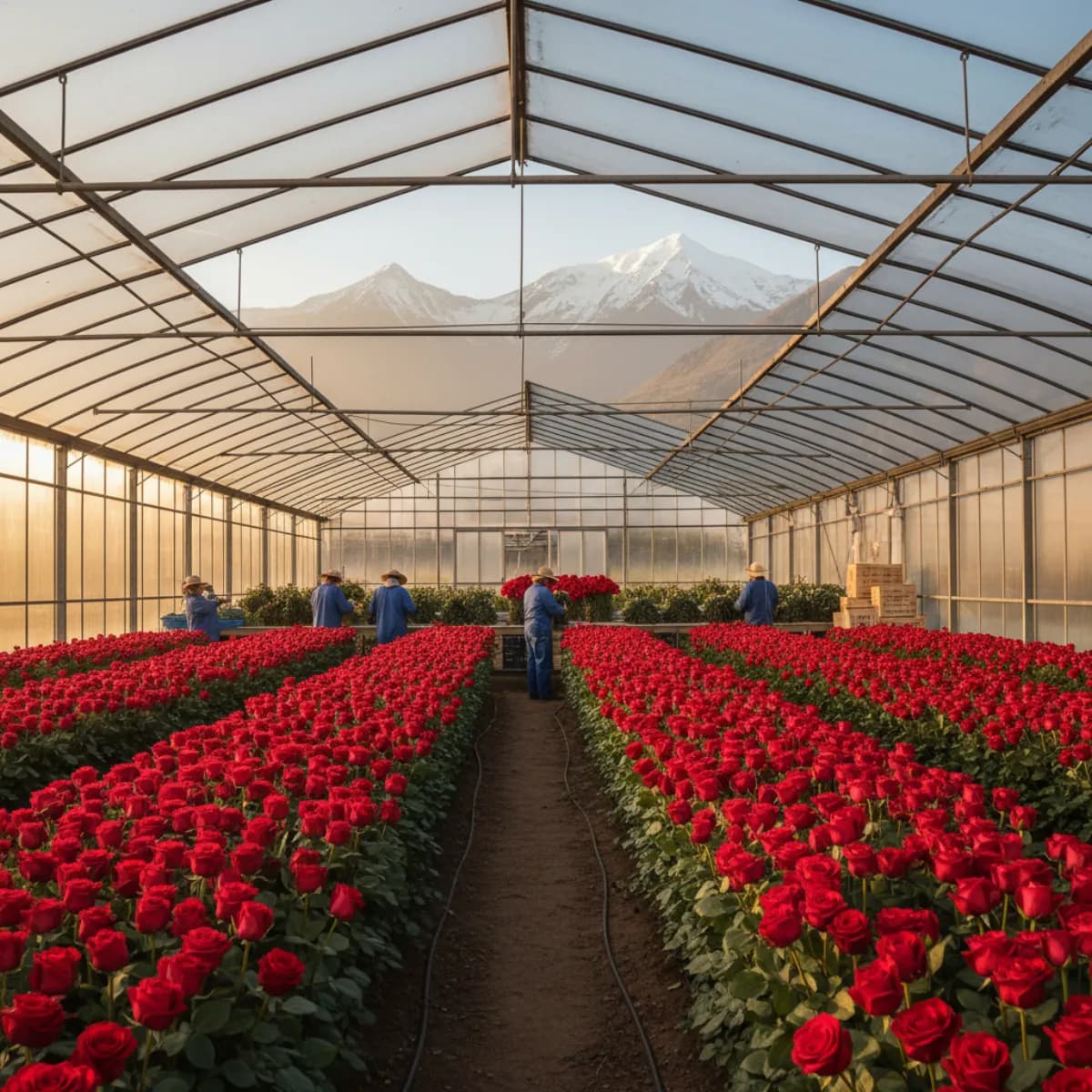
Ecuador's flowers — particularly its signature large-headed roses — command premium pricing in international markets due to the unique combination of equatorial sunlight and high-altitude growing conditions (2,800+ meters) in the inter-Andean valley north of Quito.
Competitive Landscape
Ecuador faces intensifying competition for the US Valentine's market:
| Competitor | Volume (Valentine's) | US Tariff Rate |
|---|---|---|
| Colombia | 500+ million stems | 0% (FTA) |
| Ecuador | ~39,000 tons | 21.8% (until ART signed) |
| Kenya | Growing presence | GSP-eligible |
| Ethiopia | Emerging exporter | GSP-eligible |
Colombia's zero-tariff access under its FTA with the US has been a persistent competitive advantage. The ART, once signed, would eliminate this gap — but for Valentine's 2026, the damage was already done.
Sector Employment and Social Impact
The flower industry is a critical rural employer in Ecuador's highlands, particularly in Cayambe, Tabacundo, and Latacunga. Workers process flowers under strict quality standards — inspecting buds for disease and bruising, bundling up to 25 stems per bundle, and assembling 26-40 packages per hour during peak season.
The 21.8% tariff pressure threatens not only corporate margins but the 120,000 jobs dependent on the sector — many held by women in rural communities with limited alternative employment options.
What to Watch
Track the ART signing timeline — the agreement's entry into force would immediately eliminate the 15% surcharge, restoring competitiveness for Mother's Day (the sector's second-largest sales window in May). Monitor Q1 2026 export data from Expoflores for the full tariff impact across all markets, not just Valentine's. Watch for potential farm consolidation — smaller operations with thinner margins may not survive a prolonged tariff period. Track Colombian flower export data to assess whether Ecuador's tariff disadvantage is translating into market share losses.
Sources: Latin American Post, El Oriente, Expoflores
Source
Latin American Post / El Oriente — "Ecuador's Roses Race the Valentine's Deadline as Tariffs Squeeze Growers' Margins"
View originalSupport daily Ecuador business intelligence.
Research support funds source monitoring, data checks, editing, publishing, and sector coverage for professionals tracking Ecuador.