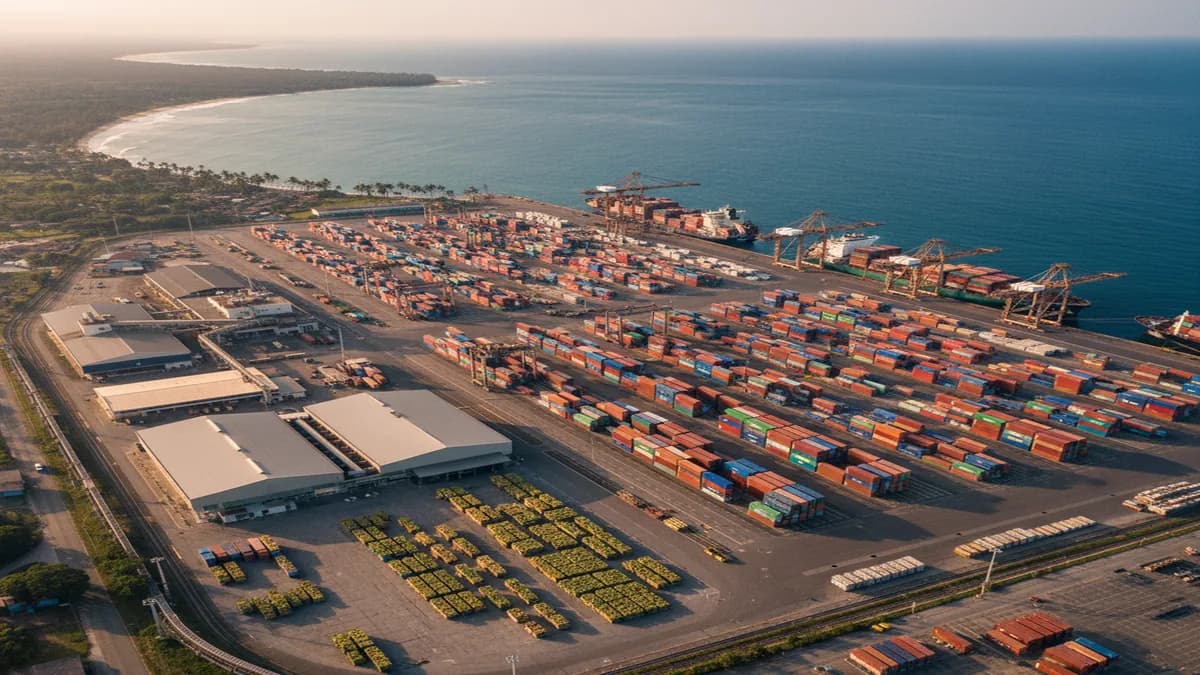
Ecuador Cocoa on Track to Overtake Ghana as World's #2 Producer in 2026

Production Trajectory
| Year | Export Volume (MT) | Export Value | Global Rank |
|---|---|---|---|
| 2023 | ~420,000 | $1.8B | #4 |
| 2024 | ~530,000 | $3.6B | #3 |
| 2025 (est.) | ~580,000 | TBD | #3 |
| 2026 (proj.) | 623,000+ | TBD | #2 (projected) |
| 2030 (target) | 800,000 | TBD | #2 (consolidated) |
Anecacao (Ecuador's National Association of Cocoa Exporters) projects exports exceeding 623,000 metric tons in 2026, which would place Ecuador ahead of Ghana.
The Historic Crossover
Between September 2024 and March 2025, cocoa exports surpassed banana exports in value for the first time in approximately 60 years. This crossover was driven by:
- Global cocoa price surge: International cocoa prices exceeded $10,000/MT in 2024, driven by supply deficits in West Africa (drought, disease, aging plantations in Ghana and Côte d'Ivoire)
- Ecuador production gains: Expanding planted area and improved yields
- Premium positioning: Ecuador's Nacional (Arriba) variety commands a premium in fine-flavor markets
Ecuador's Competitive Advantages
Varietal portfolio:
- CCN-51: High-yield hybrid accounting for ~75% of production; bulk cocoa for industrial use
- Nacional (Arriba): Fine-flavor variety (~25% of production); commands 20-40% premium; used by premium chocolate makers globally
- Ecuador supplies approximately 60% of the world's fine-flavor cocoa
Geographic factors:
- Year-round growing season (equatorial climate)
- Diverse microclimates producing distinct flavor profiles
- Expanding planted area in coastal and Amazon regions
West African supply challenges:
- Ghana and Côte d'Ivoire face aging tree stock, swollen shoot virus, and erratic rainfall
- Ghana's output dropped ~25% between 2022-2024
- Replanting cycles take 5-7 years to restore production
Pricing Environment
Global cocoa futures remain elevated relative to historical averages:
- 2023 average: ~$3,500/MT
- 2024 peak: >$10,000/MT
- Current (March 2026): Trading at elevated levels, though below 2024 peak
Ecuador benefits from both the volume increase and the price environment. Even if prices normalize, the expanded production base ensures higher absolute revenue.
Sector Risks
- Price normalization: If West African supply recovers, prices will compress — though Ecuador's volume gains provide a buffer
- Climate vulnerability: El Niño/La Niña cycles affect coastal production zones
- Cadmium content: EU regulations on cadmium levels in cocoa pose compliance challenges for some Ecuadorian origins
- Labor market: Expanding production requires additional harvest labor, which competes with other agricultural sectors
What to Watch
- 2026 mid-year export data — confirmation of the 623,000 MT trajectory
- Ghana production reports — if Ghana rebounds, the #2 ranking could be delayed
- EU cadmium regulations — implementation of maximum cadmium limits could redirect some Ecuadorian cocoa away from European markets
- Global cocoa price trajectory — sustained high prices incentivize further planting and investment
- China as emerging buyer — Chinese chocolate consumption is growing; Ecuador is positioning itself for this market
Sources: Reuters, Investing.com, France24
Source
Investing.com — "Ecuador Set to Become World's No. 2 Cocoa Grower, Industry Head Says"
View originalSupport daily Ecuador business intelligence.
Research support funds source monitoring, data checks, editing, publishing, and sector coverage for professionals tracking Ecuador.