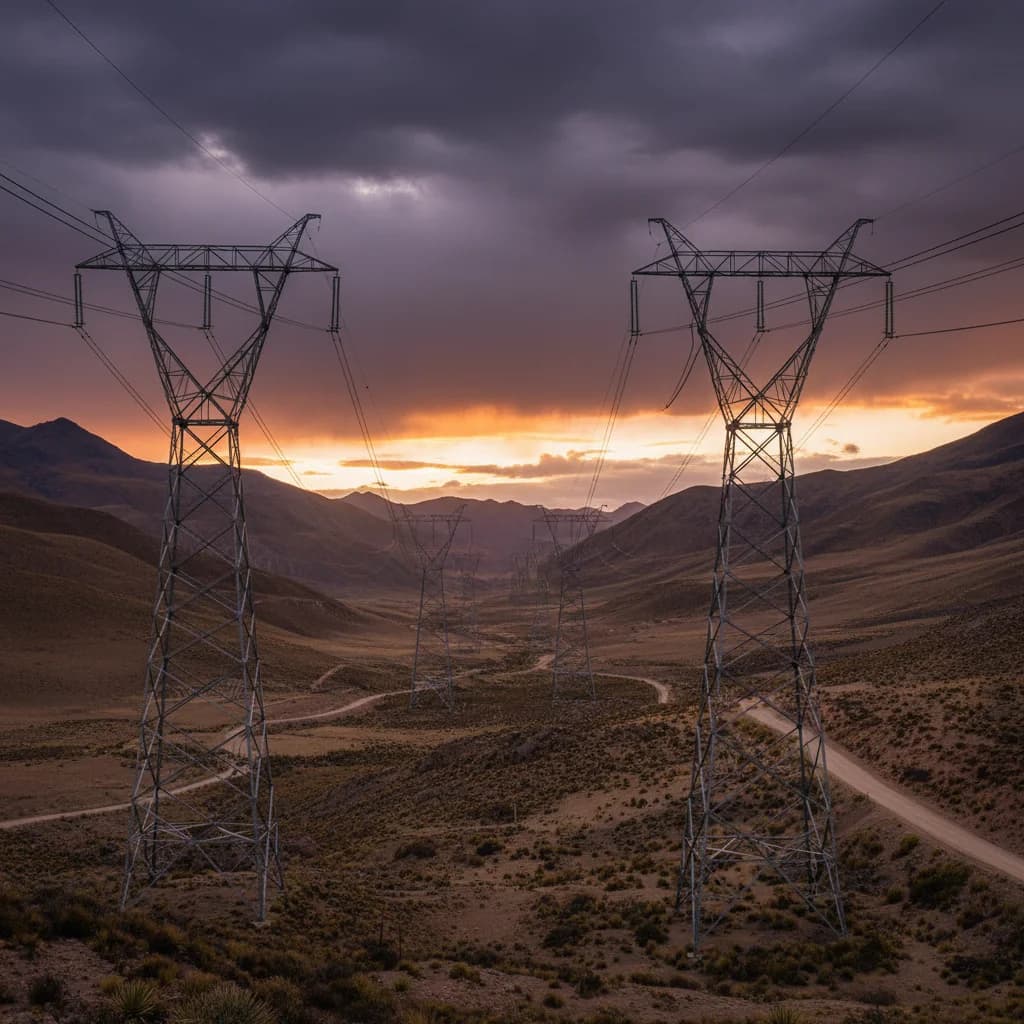
Celec's Sopladora Plant Returns to Full 487 MW Capacity — Three Units Online Since April 5

Operational Summary
| Metric | Value |
|---|---|
| Installed capacity | 487 MW |
| Units | 3 (Unit 1, Unit 2, Unit 3) |
| Unit 2 nominal output | 162.3 MW |
| Full capacity restoration date | 5 April 2026 |
| Operator | Celec Sur (unit of Corporación Eléctrica del Ecuador — Celec EP) |
| Paute Integral complex share of national demand | ~40% |
Sources: Expreso (link) and Teleamazonas (link).
The Outage
Incident: 21 July 2023 — "durante el arranque de la unidad 2 se presentó un evento técnico" (Expreso). Unit 2 suffered a technical event during startup.
Component damaged: Turbine shaft ("el eje de la turbina").
Shaft specifications: 40 toneladas, 8.23 metros de largo (Expreso) / "40 toneladas y más de ocho metros de longitud" (Teleamazonas). ~40 metric tonnes, 8+ meters long.
Interim operations: Teleamazonas: plant operated at "80%" capacity from April 2024 onward until shaft replacement.
Restoration
Action taken: Full shaft replacement — "reemplazo del eje de la turbina" (Teleamazonas).
Return to grid: Per Teleamazonas, Unit 2 was "sincronizada nuevamente al Sistema Nacional Interconectado" after reaching "su potencia nominal de 162,3 MW." Per Expreso: "Sopladora empezó a operar con sus tres unidades a partir del 5 de abril de 2026."
Repair cost: Not disclosed in source reporting.
System Implications
Generation additions: Restoration adds ~97 MW of incremental baseload capacity to the Sistema Nacional Interconectado (SNI) — reflecting the 20% gap between prior 80% operation and current 100% nominal output.
Paute Integral context: The complex — comprising Mazar, Molino, Sopladora, and related components — represents "alrededor del 40 % de la demanda nacional" (Expreso). Full Sopladora availability firms the complex's output profile.
Blackout context: Coastal and national blackouts have been a recurring 2024-2026 theme, driven largely by distribution-side constraints (CNEL), Mazar reservoir levels during dry season, and transmission bottlenecks. Sopladora restoration addresses a generation-side gap specifically; it does not resolve the distribution or reservoir-cycle constraints.
Dry season exposure: Q3/Q4 2026 dry season remains the critical stress test. Full Sopladora availability improves hydroelectric dispatch flexibility but does not eliminate thermal-generation dependency during low hydrology periods.
Technical Notes
Turbine shaft failures at scale (40-tonne, 8+ meter components) are unusual operationally and require specialized fabrication. The ~33-month outage window (July 2023 → April 2026) reflects component-manufacturing lead times — large hydroelectric shafts typically have 18-24 month lead times from specification to installation readiness.
The outage is the second major Paute-complex incident in recent years. Prior Mazar sediment-management issues constrained throughput; Unit 2 Sopladora shaft failure removed 162.3 MW of capacity across two consecutive dry seasons.
What to Watch
- Dry season (Q3/Q4 2026) dispatch: Whether full Sopladora availability reduces thermal generation requirements vs. 2024/2025 baselines
- CNEL distribution investments: Generation-side recovery highlights distribution as the binding constraint; infrastructure spending to watch
- Next Paute complex maintenance window: Scheduled major overhauls for other units
- Tariff-recovery analysis: Whether Sopladora restoration enables tariff reductions or rolls through to system-wide pricing neutrality
- Generation mix reporting: CENACE monthly dispatch reports will show Sopladora's incremental contribution
- Coastal blackout recurrence: Distribution-side failures now the primary demand-loss risk; test of how much generation recovery alone can mitigate
Sources: Expreso, Teleamazonas
Source
Expreso, Teleamazonas — "Sopladora recupera su capacidad total para generar hasta 487 MW al sistema eléctrico de Ecuador"
View originalSupport daily Ecuador business intelligence.
Research support funds source monitoring, data checks, editing, publishing, and sector coverage for professionals tracking Ecuador.